Anxiety has a way of showing up at the most inconvenient times. It can creep into quiet moments, interrupt sleep, cloud decision-making, and leave a person feeling restless even when everything around them seems calm.
For many Christians, anxiety carries an additional burden: the quiet question of whether struggling emotionally means something is wrong with their faith.
If you have ever found yourself lying awake at night replaying worries in your mind while also wondering why your faith doesn’t seem to silence the fear, you are not alone.
Many believers wrestle with the tension between anxiety and faith.
The good news is that struggling with anxiety does not mean you have failed spiritually. Faith does not always remove fear instantly. Often, faith is what helps us keep moving forward even when fear is still present.
Learning how to choose faith over fear is not about pretending anxiety does not exist. Instead, it is about learning to trust God even when emotions feel overwhelming.
Understanding Anxiety from a Faith Perspective
Anxiety is not simply a lack of faith. It is a human response to uncertainty, pressure, and emotional strain.
The mind naturally tries to anticipate danger or solve problems before they happen. While this instinct can sometimes be helpful, it can also spiral into persistent worry and restlessness.

From a Christian perspective, anxiety becomes particularly challenging when it begins to crowd out peace, hope, and trust in God’s care.
But Scripture shows that emotional struggle has always been part of the human experience. Many biblical figures expressed fear, worry, and distress while still maintaining deep faith.
The Psalms, for example, are filled with honest prayers from people who loved God yet still experienced anxiety about their circumstances.
Faith does not eliminate every emotional struggle, but it provides a place to bring those struggles honestly before God.
Why Anxiety Makes It Hard to Rest
One of the most frustrating aspects of anxiety is its ability to disrupt rest.
Even when the body is physically tired, the mind may continue racing with questions, worries, and “what if” scenarios.
People experiencing anxiety often find themselves thinking about:
- future uncertainties
- unresolved problems
- responsibilities they feel unable to manage
- fears about things going wrong
This constant mental loop can make it difficult to sleep, relax, or focus, and at times it may feel almost impossible to stop overthinking, no matter how much you want to.
From a neurological standpoint, anxiety activates the body’s stress response system. The brain begins to interpret situations as potential threats, releasing stress hormones that keep the body alert.
This response can make it feel nearly impossible to calm the mind.
But this is where faith becomes a powerful resource.
Faith does not necessarily stop anxious thoughts immediately, but it offers a way to interrupt them with truth, perspective, and trust.
Faith Over Fear: What It Really Means
The phrase faith over fear has become a common encouragement among Christians, but it is sometimes misunderstood.
Choosing faith over fear does not mean pretending fear does not exist.
It means deciding that fear will not have the final voice.
Faith acknowledges fear honestly but refuses to allow fear to control decisions, outlook, or identity.
In practical terms, choosing faith means reminding ourselves of truths that are bigger than our current worries.
For example:
Fear says everything is falling apart – faith reminds us that God is still in control.
Fear says we are alone in our struggle – faith reminds us that God is present even in uncertainty.
Fear focuses on the worst possible outcome – faith focuses on God’s faithfulness.
Faith becomes the anchor that steadies the heart when emotions feel unpredictable.
Trusting God in the Middle of Anxiety
One of the most difficult spiritual practices is learning to trust God while anxiety is still present.
Many people assume that trust means feeling completely calm before moving forward. But in reality, trust is often something we practice while our emotions are still unsettled.

Anxiety tends to convince us that everything depends on our ability to figure things out quickly. It pressures us to solve problems immediately, anticipate every possible outcome, and prepare for the worst.
Faith, however, invites us into a different posture, one that rests in the character of God rather than the certainty of our circumstances.
Trusting God in the middle of anxiety means believing that He will do what He has promised to do.
Throughout Scripture, God consistently shows Himself to be faithful. His character does not change with circumstances, and His promises are not dependent on human understanding. Even when situations feel uncertain, God remains trustworthy.
Trust is built on this truth: God keeps His word.
When anxiety begins to rise, it often focuses our attention on everything we cannot control. Faith gently redirects our focus toward the One who holds every outcome. Even when anxiety makes us feel far from God, He remains present and unchanging.
Instead of trying to force solutions or carry every burden alone, trusting God allows us to release the pressure of needing to control everything.
Sometimes this trust looks like quiet patience. It means acknowledging that not every answer has to come immediately. Not every problem must be solved today. Not every fear deserves our attention.
Waiting on God is not passive; it is an active expression of faith.
Waiting means believing that God’s timing is wise, even when it does not match our own expectations. It means choosing not to let anxiety rush us into fear-driven decisions.
In seasons of uncertainty, the invitation from God is often simple: be still, trust, and wait.
This kind of trust does not mean we ignore responsibilities or avoid wise action. Rather, it means we move forward without allowing anxiety to control our hearts.
When believers trust God with their worries, something begins to shift internally. The weight of trying to control the future begins to lift. Peace slowly replaces the urgency that anxiety creates.
Trusting God in anxiety is a daily practice. It involves reminding ourselves again and again that God sees the situation more clearly than we do, loves us more deeply than we understand, and is already working in ways we cannot yet see.
Even when the path forward feels unclear, faith allows us to rest in this truth: God will do what He said He will do.
And sometimes the most faithful response to anxiety is simply this – placing the situation in God’s hands and choosing to wait with trust instead of worry.
Christian Anxiety Help: Practical Ways to Respond
When anxiety begins to take hold, several practices can help bring both spiritual and emotional grounding.
These practices combine faith with healthy emotional awareness.
1. Slow Down and Breathe
Anxiety often creates a sense of urgency in the mind. Slowing down physically can help interrupt this cycle.
Taking a few deep breaths allows the body to shift out of its heightened stress response.
Many people find it helpful to pair breathing with prayer or reflection.
For example, silently repeating a short prayer while breathing deeply can help calm both the body and the mind.
2. Bring Your Thoughts to God in Prayer
Prayer is one of the most effective ways to process anxious thoughts.
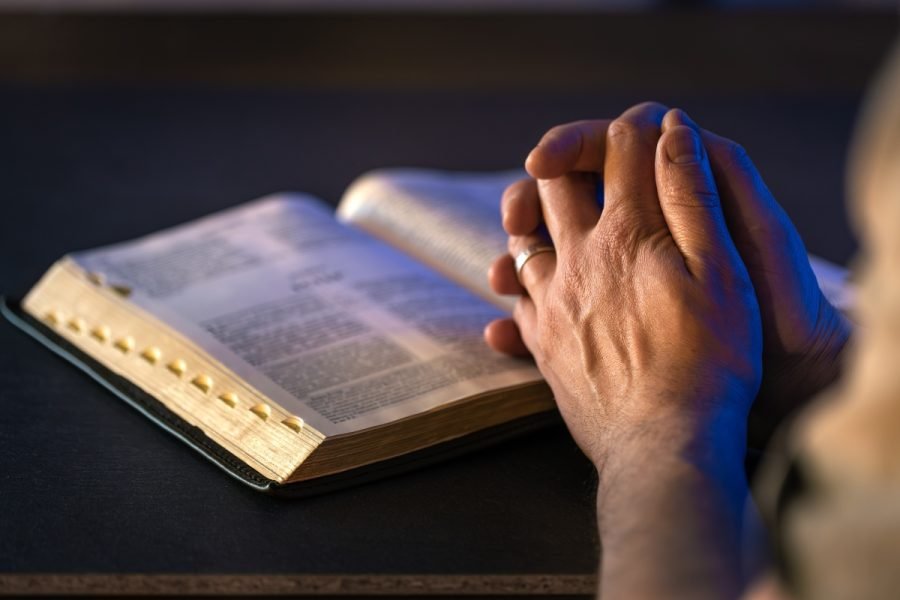
Instead of trying to suppress worries, prayer allows believers to speak those concerns openly before God.
Prayer shifts the burden of anxiety from the individual to the One who is capable of carrying it.
This does not mean the problem disappears instantly, but prayer creates emotional space for peace to enter.
3. Replace Fearful Thoughts with Truth
Anxiety often magnifies worst-case scenarios.
Faith helps redirect those thoughts toward truth.
This might involve reminding yourself of:
- God’s faithfulness in the past
- Promises found in Scripture
- The reality that you are not facing life alone
Replacing fear-based thinking with truth-based thinking is one of the most powerful ways faith supports mental health.
4. Create Moments of Worship
Worship can shift emotional perspective in powerful ways.
Listening to worship music, singing, or reflecting on God’s goodness helps redirect attention away from anxious thoughts.
Worship engages both the heart and the mind, reminding believers of God’s presence even in uncertain moments.
Many people find that even a few minutes of worship can calm the emotional atmosphere of the mind.
5. Seek Support When Needed
Faith does not mean handling anxiety alone.
Sometimes anxiety requires additional support through trusted friends, pastors, counselors, or mental health professionals. Christian faith and emotional support can work together to provide healing and clarity.
Seeking help is not a sign of weakness. It is often a step toward deeper healing.
When Faith Feels Small
There are moments when anxiety can make faith feel fragile.
During those seasons, even simple spiritual practices may feel difficult. But it is important to remember that faith is not measured by emotional strength.
Even a small step toward God, such as a simple prayer or a quiet moment of reflection, can be meaningful. God understands the weight of human emotions and meets people in their struggles with compassion.
Faith does not require perfect confidence. Sometimes faith simply means choosing to keep turning toward God one day at a time.
Finding Peace in the Middle of Uncertainty
Life rarely unfolds exactly as we expect.
Uncertainty is one of the biggest triggers for anxiety, because the human mind naturally seeks control and predictability.

Faith offers something deeper than control: trust. Trust does not eliminate every unknown, but it allows believers to move forward even when the future is unclear.
Peace often begins to grow when people stop trying to solve every possible outcome and instead focus on the present moment with God. This kind of peace does not come from having every answer. It comes from knowing that God walks with us through every season, and over time, gently finding freedom in God rather than in control.
A Prayer for When Anxiety Won’t Let You Rest
If anxiety has been weighing heavily on your heart, you might begin with a simple prayer like this:
God, you know the worries that fill my mind and the fears that keep me restless. I bring these thoughts to you today and ask for your peace. Help me trust you with the things I cannot control. Calm my heart and remind me that you are present in every moment. Strengthen my faith so that fear does not lead my life. Amen.
Moving Forward with Faith
Choosing faith over fear is not a one-time decision. It is a daily practice of trusting God in the middle of uncertainty.
Anxiety may still appear from time to time, but it does not have to define the direction of your life. Faith reminds believers that even when emotions feel overwhelming, God’s presence remains constant.
And sometimes the most powerful step of faith is simply this: continuing to trust God, even when anxiety tries to convince you otherwise.