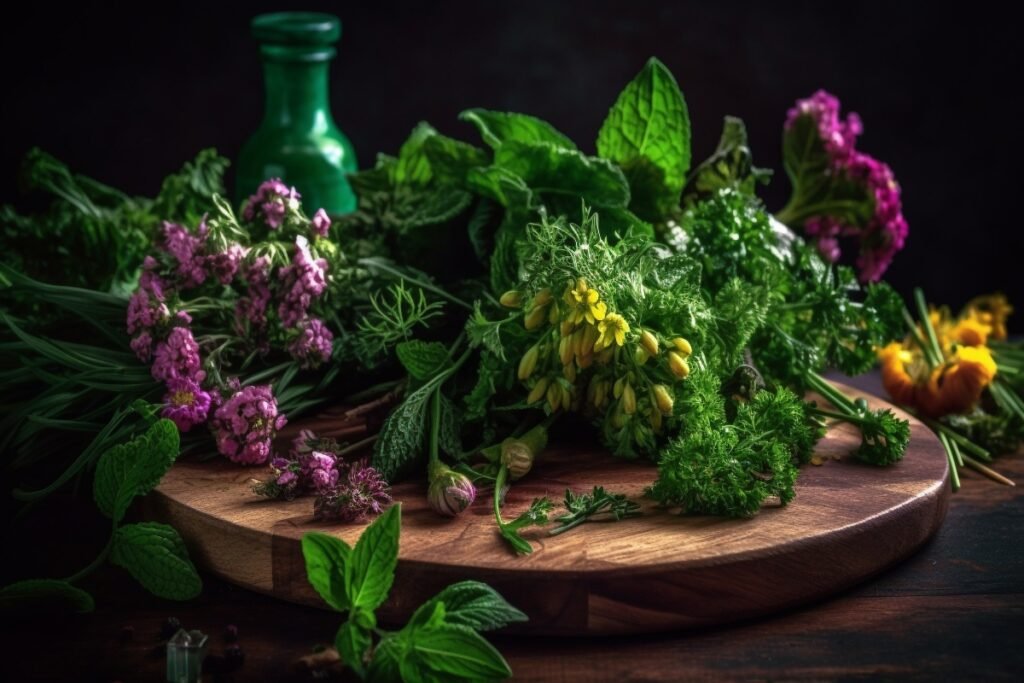
Have Christians Forgotten What God Created?
A few years ago, if someone mentioned herbs, many Christians immediately thought of home remedies, herbal tea, or their grandmother’s garden.
Today, however, conversations about herbs often come with confusion. Some associate herbs with New Age spirituality, energy healing, spirit guides, manifestation practices, or rituals that have nothing to do with biblical Christianity. Others avoid the topic altogether because they aren’t sure whether using herbs is compatible with their faith.
So let’s answer an important question: Are herbs biblical? The answer is yes.
In fact, herbs, plants, spices, and oils appear throughout Scripture. God created them, gave them to humanity, and included them in some of the most significant moments recorded in the Bible.
At the same time, Scripture draws a clear distinction between appreciating God’s creation and assigning spiritual power to created things.
As believers, we don’t worship herbs. We worship the Creator. Let’s explore what the Bible actually says.
What the Bible Does and Doesn’t Say About Herbs
Before we discuss specific herbs, let’s establish an important biblical foundation. The Bible never teaches that herbs possess spiritual power. Plants do not connect us to God. Leaves do not drive away evil spirits. Herbs do not carry divine energy. As Christians, our authority over darkness comes through Jesus Christ alone.
James 4:7 says: “Submit yourselves therefore to God. Resist the devil, and he will flee from you.”
Notice what Scripture doesn’t say. It doesn’t say to burn a bundle of herbs to repel darkness. It doesn’t tell us to assign mystical properties to plants. It points us to God.
That doesn’t mean herbs are bad. It simply means we should view them correctly. They are part of God’s creation, not objects of worship.
God Created Plants Before Modern Medicine
The first mention of herbs appears near the very beginning of Scripture. Genesis 1:29 says: “And God said, Behold, I have given you every herb bearing seed, which is upon the face of all the earth…”
Long before pharmacies, hospitals, laboratories, and modern medicine existed, God had already filled the earth with plants designed to sustain life. A few verses earlier, we read: “Let the earth bring forth grass, the herb yielding seed…” (Genesis 1:11)
God intentionally created vegetation before He created humanity. That wasn’t an accident. It was provision.
Now, let’s be careful. This does not mean every herb cures every illness. Nor does it mean Christians should reject medical care.
Luke, who wrote the Gospel of Luke and the book of Acts, was a physician. The Bible values wisdom, stewardship, and practical care. Rather, these verses remind us that God thoughtfully supplied creation with resources that support human flourishing.
The Wellness Industry Didn’t Invent Herbalism
One of the biggest misconceptions today is that herbal wellness originated with modern wellness culture. It didn’t. The Bible mentions numerous plants, herbs, spices, and oils centuries before wellness influencers, supplement companies, or social media trends existed.

Scripture references:
- Hyssop
- Frankincense
- Myrrh
- Cinnamon
- Mint
- Olive oil
- Cedarwood
- Balm of Gilead
These were part of everyday life in biblical times. Some were used for worship. Some were used for cleansing. Some were used for cooking. Some were highly valued trade goods.
The issue isn’t whether herbs exist. The issue is whether we honor God as their Creator.
Psalm 104:14 says: “He causeth the grass to grow for the cattle, and herb for the service of man.”
The glory belongs to God, not the herb.
Five Biblical Herbs and Spices That Are Still Used Today
1. Saffron: A Symbol of Beauty and Abundance
Scripture Reference
Song of Solomon 4:14 mentions: “Spikenard and saffron…”
Saffron was considered one of the most precious spices of the ancient world. Its inclusion in Song of Solomon reflects beauty, value, abundance, and delight. Today, saffron remains one of the most expensive spices on earth because it takes thousands of hand-harvested flowers to produce a small amount.
Modern Uses
Researchers have studied saffron for its potential role in:
- Supporting emotional well-being
- Mood support
- Cognitive health
- Stress management
Practical Ways to Use It
- Add a small amount to rice dishes
- Brew saffron tea
- Mix into soups and stews
- Use in warm milk drinks
A little goes a long way.
2. Frankincense: A Gift Fit for a King
Scripture Reference
When the wise men visited Jesus, they brought: “Gold, and frankincense, and myrrh.” (Matthew 2:11)
Frankincense was highly prized throughout Scripture and frequently used in worship and sacred offerings.
Modern Uses
Today, frankincense is commonly found in:
- Essential oils
- Aromatherapy products
- Wellness blends
- Massage oils
Researchers have also explored compounds found in frankincense for their anti-inflammatory properties.
Practical Ways to Use It
- Diffuse frankincense essential oil
- Use during prayer or quiet reflection
- Incorporate into wellness routines according to manufacturer guidelines
The aroma alone can create a peaceful atmosphere for worship and meditation on God’s Word.
3. Hyssop: The Herb of Cleansing
Scripture References
Hyssop appears in several significant moments throughout Scripture. During Passover: “Take a bunch of hyssop…” (Exodus 12:22). David later prayed: “Purge me with hyssop, and I shall be clean.” (Psalm 51:7)
Because of these references, hyssop became associated with cleansing, purification, and renewal.
Modern Uses
Hyssop is traditionally used for:
- Herbal teas
- Respiratory support
- Seasonal wellness
- Herbal preparations
Practical Ways to Use It
- Brew as a tea
- Add to herbal blends
- Use dried hyssop in homemade preparations
Its biblical symbolism makes it especially meaningful as a reminder of spiritual cleansing through Christ.
4. Cinnamon: More Than a Kitchen Spice
Scripture Reference
God specifically instructed Moses to include cinnamon in the sacred anointing oil: “Take thou also unto thee principal spices… sweet cinnamon…” (Exodus 30:23)
Cinnamon was considered precious and valuable.
Modern Uses
Today cinnamon is commonly used to support:
- Healthy blood sugar levels
- Antioxidant intake
- Heart health
- General wellness
Practical Ways to Use It
- Sprinkle on oatmeal
- Add to coffee or tea
- Mix into smoothies
- Use in baked goods
Many people already enjoy cinnamon daily without realizing its biblical significance.
5. Mint: Small but Valuable
Scripture Reference
Jesus mentioned mint when addressing the Pharisees: “Ye pay tithe of mint and anise and cummin…” (Matthew 23:23)
Mint was valuable enough to be included in tithing practices.
Modern Uses
Mint is often used for:
- Digestion
- Nausea relief
- Mental clarity
- Fresh breath
Practical Ways to Use It
- Fresh mint tea
- Infused water
- Salads
- Smoothies
Mint is also one of the easiest herbs to grow at home.
What About Healing?
Whenever we discuss herbs, it’s important to maintain a biblical perspective.
The Bible teaches that God heals. Sometimes He heals miraculously. Sometimes He heals through physicians. Sometimes He heals through lifestyle changes. Sometimes He heals gradually over time. And sometimes He sustains us through difficulty while accomplishing purposes we cannot yet see.
Our trust is never in the herb. Our trust is in God. An herb can never replace the Great Physician. But it can remind us of the wisdom and provision of the One who created it.
Ezekiel 47:12 says: “And the fruit thereof shall be for meat, and the leaf thereof for medicine.” The verse points us back to God’s provision. Every good thing ultimately comes from Him.
A Christian Perspective on Natural Wellness
As believers, we don’t have to fear God’s creation. We simply need to keep it in its proper place.
We don’t worship plants. We don’t pray to plants. We don’t assign spiritual powers to plants. We don’t place our faith in plants. Instead, we recognize them as gifts from a loving Creator.
James 1:17 reminds us: “Every good gift and every perfect gift is from above…”Whether it’s food, medicine, wisdom, healing, or daily provision, every good gift comes from God.
The next time you enjoy a cup of mint tea, sprinkle cinnamon into your coffee, or read about herbs mentioned in Scripture, let it remind you of something far greater: God is a Provider. And everything He created ultimately points back to Him.