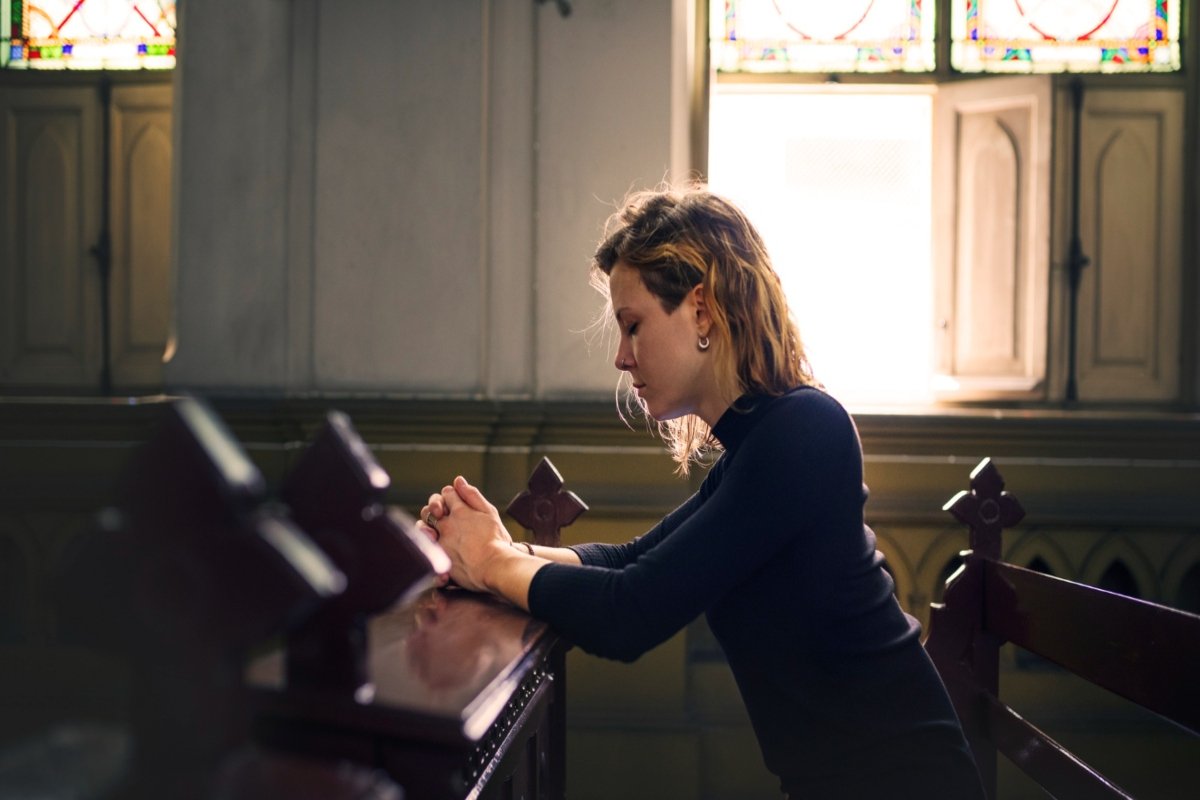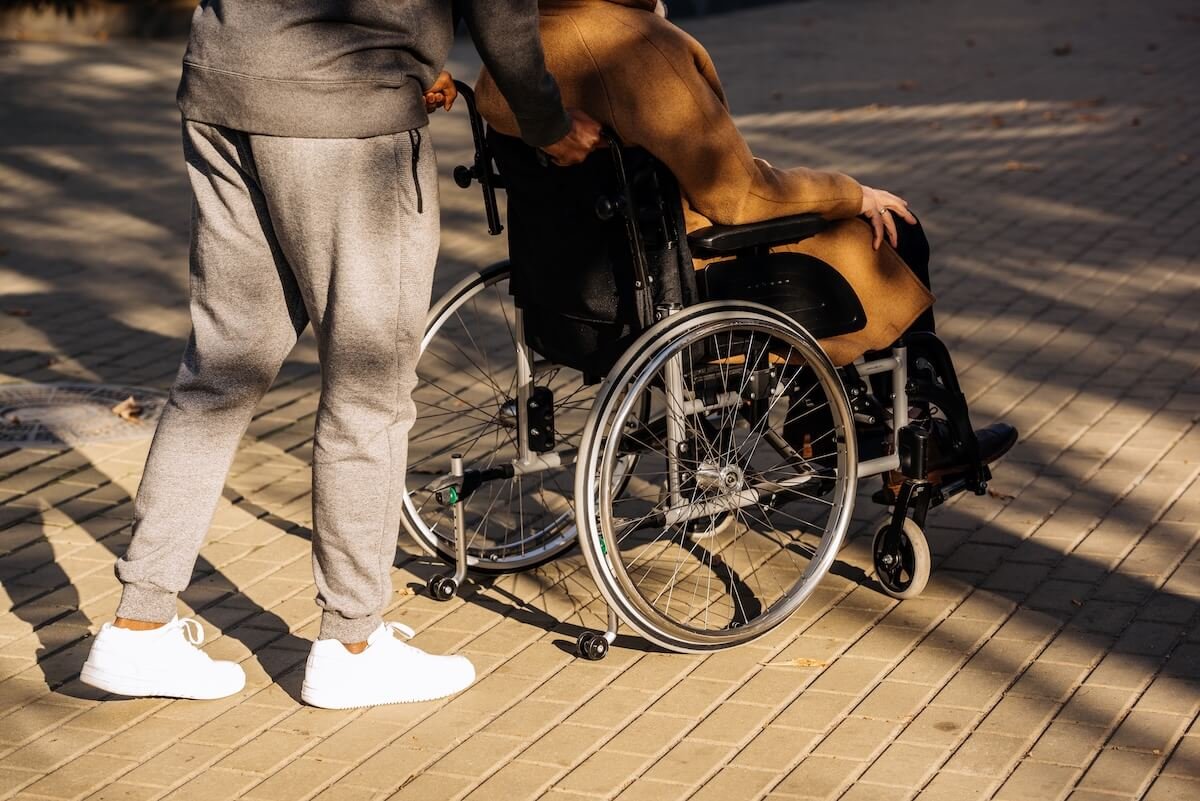
There is a particular kind of weariness that comes from praying for healing and waking up to the same condition.
Maybe you have prayed for yourself. Maybe it is your spouse, your child, your parent, or someone you love. You have asked God to heal. You have gone to appointments, followed treatment plans, changed routines, asked other people to pray, and tried to keep believing. But days have turned into months—or even years—and the healing you hoped for has not happened yet.
Sometimes you aren’t even asking for anything extraordinary. You just want life to feel normal again.
You want to wake up without pain. You want the test results to change. You want your loved one to feel like themselves again. You want to stop arranging your life around appointments, symptoms, medications, limitations, or the constant uncertainty of what tomorrow might bring.
And somewhere in that waiting, a harder question can begin to surface: God, I know You can heal. So why haven’t You healed this? That is not an insignificant question. And I don’t think we have to be afraid to bring it before God.
Scripture never presents God as intimidated by our grief, questions, or disappointment. But it does continually invite us to trust Him when we cannot understand what He is doing.
And when it comes to healing, that can be especially difficult.
When You’ve Been Praying for Healing for a Long Time
One of the reasons waiting for healing can become so discouraging is because we often have a picture in our minds of what healing should look like.
We pray for the tumor to disappear. We pray for the pain to stop. We pray for mobility to return. We pray for the medication to no longer be necessary. We pray for our loved one to recover so that life can finally get back to the way it was before.
And we should pray.
Jesus never rebuked people for coming to Him asking to be healed. Throughout the Gospels, hurting people came to Him with physical needs, desperate situations, and seemingly impossible conditions.
Jesus healed blind eyes. He cleansed lepers. He restored mobility. He healed people who had suffered for years. He even raised the dead, so there is nothing wrong with praying boldly for physical healing.
But waiting becomes difficult when we begin to believe that God’s goodness can only be proven by the particular outcome we are asking Him to give us.
That is where faith becomes deeper than simply believing that God can heal me.
Faith also has to wrestle with this: Can I trust God while I am still waiting?
Can I believe He is good before I know the outcome?
Can I recognize His hand if His provision looks different from what I expected?
Can I receive the doctors, wisdom, treatment, people, resources, strength, and grace He provides along the way without assuming that because the miracle hasn’t happened yet, God isn’t working?
Those are harder questions. But they are important ones.
Because sometimes God changes the circumstance. Sometimes He changes something in us while we walk through it. And sometimes He does both.
The Woman Who Waited Twelve Years
There is a woman in Scripture who understood what it meant to live for years with a condition she desperately wanted changed. Luke 8 tells us about a woman who had been suffering from an issue of blood for twelve years. Twelve years.
It is easy to read those two words quickly when we already know how the story ends. But imagine living them.
Twelve years of waking up with the same condition.
Twelve years of adjusting your life around something you did not want.
Twelve years of hoping things might change.
Twelve years of watching other people’s lives move forward while yours remained affected by the same physical problem; and then she heard about Jesus. The crowd around Him was so thick that people were pressing against Him from every direction. But she made her way through anyway. Luke tells us that she came behind Jesus and touched the border of His garment.
Immediately, the bleeding stopped.
Jesus asked who had touched Him. Peter couldn’t understand the question because everyone was touching Him. But Jesus knew that something different had happened. The woman eventually came forward trembling and told Him what she had done.
And Jesus said “Daughter, be of good comfort: thy faith hath made thee whole; go in peace.” — Luke 8:48 (KJV)
Her story reminds us of something important: The length of your wait does not diminish the power of Jesus. Twelve years had not made her invisible to Him. Her condition had not become too old. Her situation had not become too complicated. Jesus was still able to heal.
But we also have to be careful about what we make her story mean.
Her testimony does not give us a formula that says, If I believe hard enough, God must heal me physically. Faith is not a lever we pull to force God’s hand. And someone who remains sick should never be made to feel that their condition is proof that they simply didn’t have enough faith.
Instead, this woman’s story gives those who are waiting permission to keep bringing their need to Jesus.
We can still ask. We can still pray. We can still believe He is able.
And at the same time, we can trust Him with what happens next.
Jesus Didn’t Heal Everyone the Same Way
Something else stands out when we look closely at the healing ministry of Jesus: He did not use one method every time.
In John 9, Jesus made clay, put it on a blind man’s eyes, and told him to wash in the pool of Siloam. The man obeyed and came back seeing.
In Mark 10, blind Bartimaeus cried out to Jesus, and Jesus restored his sight.
But Mark 8 records something especially interesting. Jesus touched another blind man, and after the first touch, the man could see, but not clearly. He described people as looking like trees walking. Jesus placed His hands on the man’s eyes again, and then his sight was fully restored.
One received an instruction.
Another received healing after crying out.
Another experienced restoration in stages.
Same Jesus. Different journeys.
That matters when you are waiting on God.
Because sometimes we become so focused on how we think healing should happen that we overlook the ways God may already be at work.
Healing can be miraculous. It can also involve a process. God can provide wisdom. He can work through skilled physicians and effective treatment. He can lead us toward changes we need to make. He can surround us with people who help carry the burden. And when a condition does not change the way we prayed it would, He can give sustaining grace that enables us to live faithfully in circumstances we never would have chosen.
None of those things require us to stop praying for healing. They invite us to broaden our understanding of what God’s work may look like while we wait.
So if you are waiting on healing today, don’t assume that waiting means God is absent. Let’s look at seven ways He may already be working, even before you can see the full answer to your prayer.
1. Through Miraculous Intervention
Sometimes God heals in a way that cannot be explained by the natural course of events.
Scripture is filled with moments when people faced physical conditions beyond their ability to change, and God intervened. Jesus restored sight to the blind, cleansed those with leprosy, enabled the lame to walk, and healed people who had suffered for years.
We should never become so accustomed to doctors, diagnoses, treatments, and medical explanations that we forget God is still God.
There is nothing wrong with asking Him for the miracle.
If you are waiting for healing today, you can pray specifically. You can ask God to remove the disease, restore what has been damaged, change the diagnosis, relieve the pain, or do what physicians have said cannot be done.
The angel told Mary:
“For with God nothing shall be impossible.” — Luke 1:37 (KJV)
But believing in miraculous healing does not mean pretending the diagnosis isn’t real. Faith doesn’t require us to deny what the doctor said. Faith acknowledges what is true while also acknowledging that God is greater than what we can see.
Think about the man at the pool of Bethesda in John 5. Scripture tells us that he had lived with his condition for thirty-eight years. When Jesus encountered him, He asked, “Wilt thou be made whole?” The man began explaining why he had been unable to get into the pool.
But Jesus did not need the pool.
“Rise, take up thy bed, and walk.” — John 5:8 (KJV)
And the man was immediately made whole.
For thirty-eight years, his condition had been part of his everyday reality. Then he encountered Jesus, and everything changed.
That story doesn’t give us a timetable for our own healing. It doesn’t mean that if we have prayed for thirty-eight years, our miracle must come tomorrow. But it does remind us that a long-standing condition is not beyond God’s power.
So keep praying.
Ask boldly.
Believe that God is able.
And while you wait, resist the temptation to decide in advance what God can or cannot do.
Heart Check:
Have I stopped asking God for healing because I have started believing my situation is impossible?
Prayer:
Father, You know exactly what I need and how long I have been waiting. I believe You are able to heal, restore, and do what I cannot do for myself. Help me pray with faith without trying to control the outcome. I place my body, my loved one, and this entire situation into Your hands. In Jesus’ name, amen.
2. Through Faith
Faith is an important part of healing, but we have to understand what biblical faith actually means.
Throughout the Gospels, Jesus sometimes connected a person’s faith with their healing. We have already seen it in the woman with the issue of blood when He told her:
“Daughter, be of good comfort: thy faith hath made thee whole; go in peace.” — Luke 8:48 (KJV)
But faith is not a formula that guarantees we will receive the physical outcome we want. Faith does not mean ignoring symptoms, refusing medical care, or pretending we aren’t afraid.
Faith means trusting the One we are bringing our need to.
One beautiful example is found in Mark 9. A father brought his son to Jesus after watching him suffer for years. He desperately wanted Jesus to help his child, but when Jesus spoke to him about believing, the father gave one of the most honest responses in Scripture:
“Lord, I believe; help thou mine unbelief.” — Mark 9:24 (KJV)
I love the honesty of that prayer. He believed, but he was struggling.
He had faith, but he also had questions.
He wanted healing for someone he loved, but years of watching his son suffer had taken a toll.
And Jesus did not reject him because his faith wasn’t perfect.
That matters when you’re waiting for healing.
There may be days when you pray with confidence and days when fear gets loud. There may be moments when you believe God can completely turn the situation around, followed by moments when another disappointing report makes you wonder what He is doing.
You don’t have to manufacture a feeling of certainty to prove that you have faith.
Sometimes faith sounds like: “God, I still trust You.”
Sometimes it sounds like “God, I’m scared, but I’m bringing this fear to You.”
And sometimes it sounds exactly like that father’s prayer: “Lord, I believe; help thou mine unbelief.”
God can meet you there.
While you wait for healing, faith keeps turning your heart toward God instead of allowing fear to have the final word. It reminds you that your confidence is ultimately not in a particular treatment, doctor, prognosis, or even the outcome you desperately desire. Your confidence is in God.
Heart Check:
Have I been measuring my faith by how afraid I feel, or am I continuing to bring my fear to God even when believing feels difficult?
Prayer:
Lord, I believe You are able. And in the places where fear, disappointment, or exhaustion have weakened my confidence, help my unbelief. Keep my heart anchored in You while I wait. Give me faith for today without making me feel as though I have to understand tomorrow. In Jesus’ name, amen.
3. Through Wisdom
Sometimes the answer to our prayer for healing includes wisdom about what to do next.
When we are afraid, especially after receiving a diagnosis or watching someone we love struggle, it can be difficult to know which direction to take. There may be treatment options to consider, specialists to see, lifestyle changes to make, or decisions that simply feel bigger than us.
That is why I love the promise in James:
“If any of you lack wisdom, let him ask of God, that giveth to all men liberally… and it shall be given him.” — James 1:5 (KJV)
We often pray, “God, heal me,” but sometimes another prayer needs to accompany it:
“God, show me what to do.”
God’s wisdom may lead you to ask another question at your next appointment. It may lead you to seek a second opinion. It may help you recognize that something you’ve dismissed deserves attention. It may give you discernment about which treatment option to pursue—or simply give you peace about taking the next step when you cannot see the entire road ahead.
There is a practical picture of this in 2 Kings 20. King Hezekiah became seriously ill, and after he prayed, God told him through the prophet Isaiah that He had heard his prayer and would heal him. But then Scripture records something interesting:
“And Isaiah said, Take a lump of figs. And they took and laid it on the boil, and he recovered.” — 2 Kings 20:7 (KJV)
God promised the healing, yet there was still something practical to apply.
I think that’s important.
We don’t have to create a divide between trusting God and taking wise action. Sometimes God’s answer includes both prayer and a next step.
Wisdom also helps us recognize our limitations. We do not know everything about our bodies. We do not always know which decision will produce the outcome we want. And asking God for wisdom doesn’t guarantee that every decision will be easy or that we will immediately understand why He is leading us a certain way.
It simply means we don’t have to navigate the healing journey alone.
So while you are praying for healing, also pray for wisdom.
What should I do next, Lord?
What questions should I ask?
Who should I listen to?
Is there something I need to learn?
Is there a step You’ve placed in front of me that I have been afraid to take?
Sometimes God’s work in your healing journey may begin with giving you wisdom for the very next step.
Heart Check:
Have I only been asking God to change my condition, or have I also been asking Him for wisdom about how to walk through it?
Prayer:
Father, You see what I cannot see and know what I do not know. Give me wisdom for every decision in front of me. Lead me to the right people, help me ask the right questions, and give me discernment about the steps I should take. Keep fear from making my decisions for me. Help me hear Your direction and walk in wisdom one step at a time. In Jesus’ name, amen.
4. Through Doctors, Medicine, and Treatment
Sometimes we pray for God to heal us, and then He places knowledgeable people, effective treatment, or helpful medicine in our path.
Receiving medical care is not a lack of faith.
I think that is important to say because sometimes Christians can feel pressure to choose between believing God for healing and receiving medical treatment. But those things do not have to compete with one another.
Scripture tells us:
“Every good gift and every perfect gift is from above.” — James 1:17 (KJV)
Think about the knowledge God has allowed humanity to develop—the ability to identify diseases, perform surgeries, treat infections, manage chronic conditions, relieve pain, rehabilitate injuries, and provide therapies that improve quality of life.
We can thank God for those resources while still recognizing that our ultimate trust remains in Him.
There is even a small but meaningful detail in the New Testament that helps us keep a balanced perspective. Paul told Timothy:
“Use a little wine for thy stomach’s sake and thine often infirmities.” — 1 Timothy 5:23 (KJV)
Paul was a man of extraordinary faith. He had witnessed miracles. Yet when Timothy experienced recurring physical problems, Paul’s counsel included a practical remedy.
That tells us something.
Faith and practical care are not enemies.
Sometimes God’s provision may look like the specialist who finally recognizes what others missed.
It may look like a medication that helps your body function better.
It may be surgery, physical therapy, rehabilitation, counseling, or a treatment plan that takes months or even years.
And sometimes medicine doesn’t completely remove the condition but helps you live more fully with it. That matters too.
We can become so focused on the dramatic miracle that we overlook the quieter ways God is providing help along the journey.
If you’ve been praying for God to heal you and He has also given you access to people with knowledge, skill, and resources that can help, don’t automatically dismiss that provision because it doesn’t look supernatural enough.
God is not limited to one method.
Pray before the appointment.
Pray for your doctors.
Ask questions.
Seek appropriate medical guidance.
Pray over the treatment decisions.
And continue trusting God through the process.
The physician is not God. The medicine is not God. The treatment is not God.
But God can certainly work through them.
Heart Check:
Could I be overlooking something God has provided because I expected His help to look different?
Prayer:
Father, thank You for every person and resource You have placed in my path. Give my doctors and caregivers wisdom. Give me discernment as I make decisions about my health. Help me receive good care without placing my ultimate confidence in people, medicine, or outcomes. My trust is in You, and I ask You to work through every resource You provide. In Jesus’ name, amen.
5. Through Obedience and Stewardship
Sometimes, while we are asking God to heal our bodies, He may also be showing us ways to better care for the bodies He has given us.
Scripture reminds us: “What? know ye not that your body is the temple of the Holy Ghost which is in you… therefore glorify God in your body.” — 1 Corinthians 6:19–20 (KJV)
Now, we need to be careful here.
Sickness is not automatically evidence of poor stewardship or disobedience.
People who eat well get sick. People who exercise develop serious illnesses. Children are born with medical conditions they did not cause. Some diseases are genetic. Some conditions remain despite someone doing everything their medical team recommends.
So this section isn’t about blaming ourselves for being sick.
It’s about asking an honest question:
Is there anything within my control that God is asking me to steward differently?
Maybe your body needs more rest, but you have convinced yourself that stopping is laziness.
Maybe your doctor has recommended movement, dietary changes, stress reduction, physical therapy, or another adjustment that you keep putting off.
Maybe you’ve been ignoring symptoms because you’re afraid of what you might find out.
Or perhaps you’ve been so busy caring for everyone else that you have consistently neglected your own health.
Sometimes we pray, “Lord, make me feel better,” while God is also giving us wisdom about choices we can make.
That doesn’t mean our choices cause every condition, nor does it mean healthy habits guarantee healing. It simply means that faithfulness includes stewarding what God has placed in our care—including ourselves.
Jesus Himself demonstrated the value of rest. Mark tells us that after a demanding season of ministry, Jesus told His disciples:
“Come ye yourselves apart into a desert place, and rest a while.” — Mark 6:31 (KJV)
There is something freeing about recognizing that our bodies have limits.
We need sleep.
We need nourishment.
We need movement appropriate for our abilities and circumstances.
We need periods of rest.
We may need to reduce unnecessary stress or establish healthier boundaries.
And depending on our condition, we may need professional guidance to understand what healthy stewardship actually looks like for us.
Taking care of yourself is not the opposite of trusting God. It can be one of the ways you honor Him while you wait.
There may be things about your health that you cannot change today. Don’t carry guilt for what is outside your control.
Instead, ask God to show you what is within your stewardship.
Then take the next faithful step.
Heart Check:
Is there something within my control that I know would better support my health, but I have been neglecting, postponing, or avoiding?
Prayer:
Father, thank You for the body and life You have given me. Show me where I need greater wisdom, discipline, rest, or care. Keep me from blaming myself for things beyond my control, but also give me courage to change what is within my responsibility. Help me steward myself faithfully while trusting You with what I cannot change. In Jesus’ name, amen.
6. Through Provision and Support
Sometimes God’s work in a healing season doesn’t begin with changing the diagnosis. Sometimes it looks like providing what you need to make it through the season.
Illness can affect far more than the body. It can affect your finances, your schedule, your family, your ability to work, your emotional strength, and even your relationships. If you are caring for someone who is sick, you may be carrying responsibilities you never expected to have.
And sometimes you simply get tired.
This is one of the reasons God created us for community. There are seasons when His provision comes through the hands of other people.
We see a beautiful picture of this in Exodus 17. Israel was fighting against Amalek, and as long as Moses held up his hands, Israel prevailed. But eventually, Moses became tired.
Scripture says: “But Moses’ hands were heavy… and Aaron and Hur stayed up his hands, the one on the one side, and the other on the other side.” — Exodus 17:12 (KJV)
Moses still had a role to play, but he reached a point where he could no longer do it alone. So God placed people beside him who helped hold him up. There may be seasons in your healing journey when you need an Aaron and a Hur.
It may be the friend who drives you to an appointment.
The family member who prepares dinner because you don’t have the strength.
The church member who sits with you during treatment.
The person who helps financially when medical expenses become overwhelming.
The spouse who quietly takes on responsibilities you normally handle.
The support group where you finally meet people who understand what you’ve been carrying.
Or simply the person who keeps praying when you are too exhausted to know what to pray anymore.
Don’t underestimate those things.
When we are asking God for a miracle, it can be easy to overlook the smaller provisions happening around us because they aren’t the answer we were hoping for. But provision is not insignificant just because it isn’t the miracle yet.
And receiving help is not weakness.
Sometimes we are so accustomed to being the person who helps everyone else that being the one who needs help feels uncomfortable. But there are seasons when part of trusting God is allowing Him to care for us through the people He sends.
Paul described this kind of shared burden within the body of Christ: “Bear ye one another’s burdens, and so fulfil the law of Christ.” — Galatians 6:2 (KJV)
So pay attention to the provision around you.
Who has God sent?
What door has He opened?
What resource has become available?
What burden is someone offering to help you carry?
You may still be waiting for healing while simultaneously experiencing God’s care.
Sometimes the evidence that God is working isn’t that the burden has disappeared. It’s that He keeps providing what you need to carry it.
Heart Check:
Have I been so focused on the healing I am still waiting for that I have overlooked the ways God is already providing for me? And am I willing to receive help when He sends it?
Prayer:
Father, thank You for seeing every part of what this season requires of me. Open my eyes to recognize Your provision, even when it comes differently than I expected. Give me humility to receive help and gratitude for the people and resources You place around me. And when I become weary, remind me that I was never meant to carry every burden alone. In Jesus’ name, amen.
7. Through Sustaining Grace
Sometimes we pray for God to remove the condition, and instead, He gives us grace to live faithfully in the middle of it.
This may be one of the hardest forms of God’s work to recognize because, if we’re being truthful, it may not be the answer we wanted.
We wanted the pain gone.
We wanted the diagnosis reversed.
We wanted our strength back.
We wanted our loved one completely restored.
We wanted life to return to what we considered normal.
Paul understood what it was like to ask God repeatedly to remove something from his life. In 2 Corinthians 12, he describes a “thorn in the flesh.” Scripture does not tell us exactly what that thorn was, so we should be careful not to label it as a particular illness or physical condition. What we do know is that it caused Paul enough distress that he asked the Lord three times to take it away.
God’s answer was: “My grace is sufficient for thee: for my strength is made perfect in weakness.” — 2 Corinthians 12:9 (KJV). God did not give Paul the answer he originally requested. He gave him grace.
And sustaining grace should never be treated like a consolation prize. Sometimes God’s grace looks like strength you didn’t know you had until you needed it. It is waking up and discovering that somehow there is enough grace for another day.
It is peace in a hospital room.
It is still finding reasons to laugh in the middle of a difficult season.
It is learning how to live meaningfully even though life looks different from what you imagined.
It is discovering that your diagnosis may affect your life, but it does not have the authority to define your identity.
It is being able to say, “This is hard, and God is still good.”
That doesn’t mean you have to stop praying for physical healing.
Paul asked God to remove his thorn. Jesus Himself prayed in Gethsemane about the suffering ahead of Him. Biblical surrender is not pretending we don’t have a preferred outcome.
You can ask God to change the situation and trust Him while it remains unchanged.
You can pray for healing and receive grace for today.
You can believe that God is able to do a miracle and learn how to live faithfully in the life you have right now.
And that last part matters.
Because sometimes waiting for healing can cause us to put our entire lives on hold.
When I get better, I’ll…
When this pain is gone, I’ll…
When my loved one recovers, then we’ll…
When life gets back to normal, I’ll finally…
But what if God has something for you here too? Not because sickness is good. Not because suffering doesn’t matter. And not because you should stop desiring healing. But because your life still has meaning while you wait.
God can still use you.
You can still love.
You can still worship.
You can still experience joy.
You can still serve in whatever capacity your circumstances allow.
You can still grow.
You can still bear fruit.
Your life does not become less valuable because your body—or the circumstances surrounding someone you love—doesn’t look the way you hoped it would. Sometimes God’s work is visible in what He removes, and sometimes His work becomes visible in how He sustains us through what remains.
Heart Check:
Have I been waiting for my circumstances to change before allowing myself to fully live the life God has given me today?
Prayer:
Father, You know how deeply I desire healing and how tired I sometimes become from waiting. I still ask You to heal, restore, and change what only You can change. But while I wait, give me sufficient grace for today. Help me not to postpone my entire life while waiting for a different one. Show me how to live faithfully, love deeply, receive joy, and bear fruit right here. Let Your strength be made perfect in my weakness. In Jesus’ name, amen.
What If the Healing I’m Praying for Doesn’t Come?
This is the part of the conversation about healing that can be difficult to talk about. We believe God can heal, and we pray because we believe He hears us. We have heard testimonies of diagnoses changing, bodies recovering, and situations turning around in ways no one expected.
But we also know faithful believers who prayed and did not receive the physical healing they hoped for. So what do we do with that?
First, we keep praying. There is nothing wrong with continuing to ask God for healing. There is nothing wrong with wanting the pain to stop, wanting your strength restored, or wanting someone you love to recover. We can continue believing that God is able while also trusting Him with an outcome we cannot control.
But there may also come a point when God begins helping us surrender something deeper than the condition itself. Sometimes we have to surrender the picture we had of how life was supposed to look.
Maybe you thought retirement would involve traveling with your spouse, but now much of your time is spent caring for them. Maybe you imagined running around with your grandchildren, but your body doesn’t allow you to do everything you thought you would. Maybe you are raising a child whose medical needs have changed the rhythm of your entire family. Maybe you simply thought you would be healthier by now.
Sometimes we aren’t only grieving sickness. We are grieving the life we thought we would have.
And God cares about that grief too.
Sometimes the Heart Needs Healing While the Body Is Still Waiting
Long seasons of illness can affect much more than our bodies. They can leave us disappointed, afraid, exhausted, angry, or even bitter. We can begin comparing our lives to people who seem healthy and carefree, or wondering why God healed someone else while our own prayers seem unanswered.
You may have even found yourself asking, God, why me? Why did You allow this? Did I do something wrong? Do You hear me?
Those questions don’t have to drive you away from God. They can become the beginning of an honest conversation with Him. The Psalms repeatedly show God’s people bringing Him their grief, confusion, fear, and lament. Biblical faith isn’t pretending that something doesn’t hurt; it is learning to bring what hurts into the presence of God.
“The LORD is nigh unto them that are of a broken heart.” — Psalm 34:18 (KJV)
Maybe the physical healing you have been asking for hasn’t happened yet. That doesn’t mean God cannot begin healing some of what this season has done inside you—the fear that has taken root, the bitterness you don’t want to carry, the grief over what has changed, or the hopelessness that has slowly replaced expectation.
Sometimes God also uses people to help us through that process. A pastor, trusted friend, support group, qualified counselor, therapist, or Christian mental-health professional may become part of the support you need to process grief, trauma, fear, or the emotional effects of living with illness.
Receiving that kind of help doesn’t mean you have stopped trusting God. God can work through the resources He places around us.
Healing Does Not Always Mean Returning to the Life You Had Before
I think we also have to be careful about how we define healing, because sometimes what we really mean is, God, please put everything back the way it was.
But what if life doesn’t go completely back?
There may be a scar. There may be limitations. Your family may have to establish a new rhythm. Treatment may manage a condition rather than eliminate it. You may have to learn how to live differently than you did before.
That doesn’t mean there can’t still be a beautiful, meaningful, God-filled life in the middle of what has changed.
You may discover strength you didn’t know God had developed in you. You may become more compassionate toward people whose struggles you once couldn’t fully understand. You may learn how to receive help instead of always being the one giving it. And one day, God may even allow something you learned in this season to encourage someone walking through a similar one.
God can redeem what we have walked through and use our stories to minister to others. But I want to be careful here: you do not have to turn your suffering into a ministry project in order for your life to have value.
Your first responsibility is not to make your pain useful. It is to walk with God through it.
And if He chooses to use your testimony later to strengthen someone else, what once felt like one of the loneliest chapters of your life may become the place from which you can genuinely say, “I understand. And God met me there too.”
And If Complete Healing Never Happens Here?
There are faithful believers who will live with physical conditions for the remainder of their earthly lives. There are prayers for healing whose answers we may never fully understand on this side of eternity. Scripture doesn’t require us to pretend otherwise.
But Scripture also tells us that this life is not the end of the story.
Revelation gives us a picture of the complete restoration God has promised His people:
“And God shall wipe away all tears from their eyes; and there shall be no more death, neither sorrow, nor crying, neither shall there be any more pain.” — Revelation 21:4 (KJV)
That promise should never be used to minimize someone’s suffering today. It gives us hope in the middle of it because sickness and suffering do not get the final word.
Cancer does not get the final word. Chronic pain does not get the final word. Disease, disability, and even death do not get the final word.
God does.
So while you are waiting, keep praying and keep believing that God is able. Receive the wisdom He gives you. Go to the appointments. Ask the questions. Take the next faithful step. Allow people to help you. Care for the body God has given you, and receive His grace on the days when you are simply tired.
And when you don’t understand what He is doing, you can bring that to Him too.
Whether His work in your life looks like a sudden miracle, gradual improvement, effective treatment, provision, emotional restoration, sustaining grace—or ultimately the complete restoration He has promised His people—God has not abandoned you in the waiting.